A cluster set breaks one set into small groups of reps — singles, doubles, triples — separated by 15–30 seconds of rest, racking the bar between groups. The set total might be the same six reps, but every one of them is done semi-fresh.
That changes what the set trains. In a straight set of six, the last reps slow down and the movement degrades exactly when fatigue peaks. In a cluster, the mini-rests restore just enough to keep bar speed high — so you accumulate fast, crisp, technically sound reps at loads that would otherwise grind.
How it works
- 1Choose a load heavier than you could move fast for straight reps — typically 80–90%.
- 2Perform 1–3 reps, rack, rest 15–30 seconds, repeat until the cluster is complete.
- 3Every rep gets the same intent: move the bar as fast as possible.
- 4If bar speed visibly dies, the cluster is over — quality is the whole point.
In the app
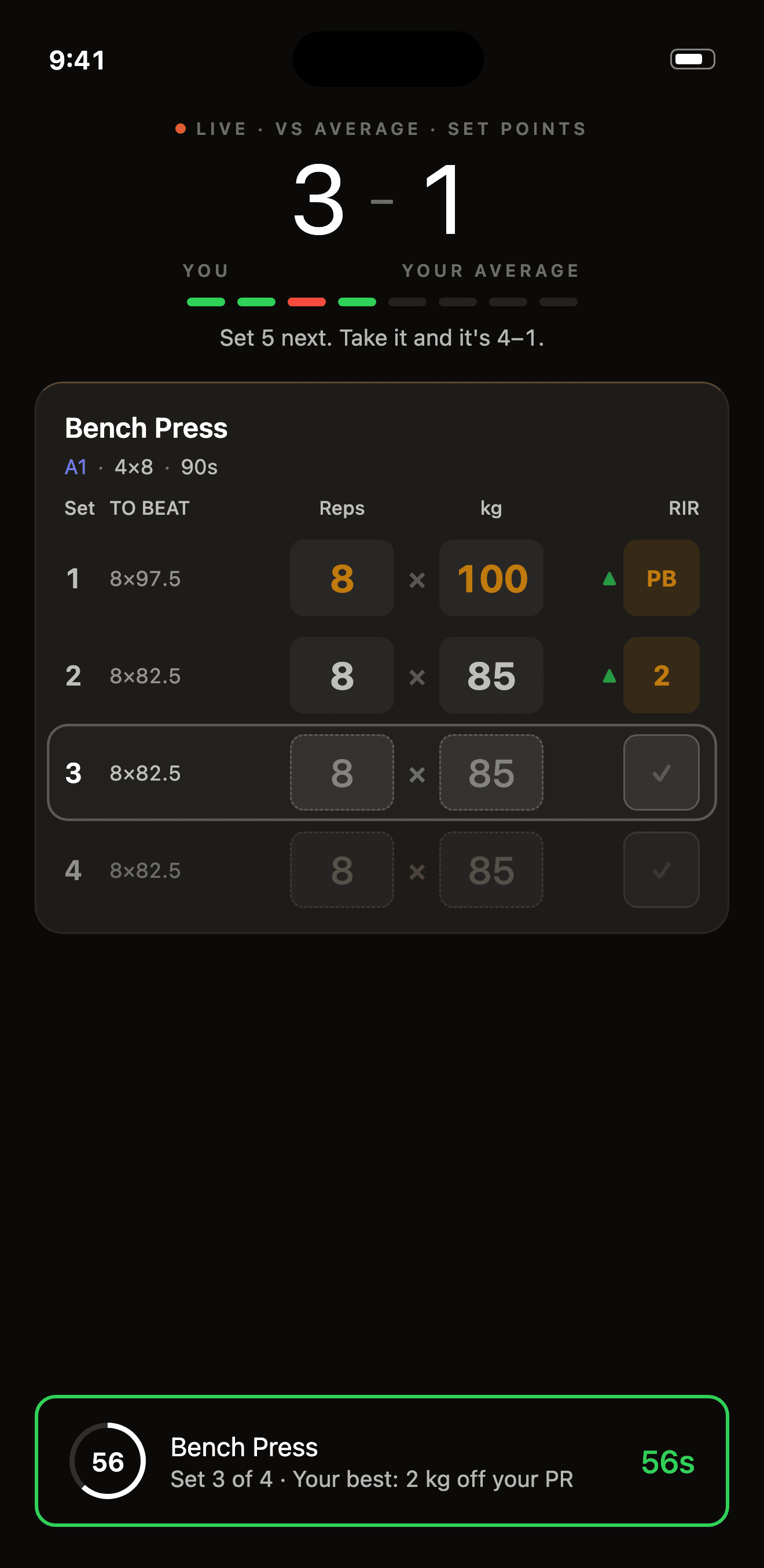
- —PRE SZN Elite programs dedicated cluster days ("Clusters + Upper") with the intra-set rests prescribed, and PRESZN's zone engine scores cluster blocks the same way it scores EDT — against your own history.
- —Rest timing matters in a cluster, and the app keeps it honest on your wrist.
PRESZN is in private beta — ask the friend who sent you this for a TestFlight invite.
Programs that run it
Questions
Cluster sets vs rest-pause — what's the difference?
Structure and purpose. Rest-pause extends a set past failure for hypertrophy; clusters prevent fatigue from ever arriving so that power and technique stay maximal. One digs a hole, the other keeps you out of it.
Who should use cluster sets?
Athletes and lifters chasing power — anyone who cares how fast the bar moves, not just whether it moves. They are also superb for practising heavy technique at volume.
How much rest between cluster reps?
15–30 seconds is the standard band — long enough to restore bar speed, short enough that the set is still one set.